
Fantasy Maps
written by Rodney Elliott @wyrmwoodmaps
The young man sat on a fallen tree beside the road. The old man noticed the tracks from tears on his dusty face, and approached him slowly.
“Are you alright, young man?” he inquired softly. The young man looked up, eyes glistening with more tears threatening to fall.
“Sir, I’ve travelled so far, and now I’m lost. I have no idea where I even am,” his voice quivered with emotion as he answered.
The old man sat down beside him and laid a hand gently on the young man’s shoulder. He turned and rummaged in his pack for a moment, and brought out a rolled parchment which he extended to the young man.
With a wide, genuine smile, the old man said, “Being lost isn’t about not knowing where you are. You’re only lost if you don’t know where you’re going.”
The young man took the parchment hesitantly as the old man heaved himself to his feet and began to slowly walk away.
“Sir, wait. What is this you’ve given me?”
The old man paused, turned to look at the young man again, and with a small chuckle said, “It’s what you need if you don’t know where you’re going. It’s a map!”
I’ve always had a fascination with places I’ve never been. Drawing fantasy maps means you will never run out of new places to explore. The unknown captures our imagination, that’s why maps from centuries ago always had strange creatures: sea serpents, dragons, and other elements from folk tales and superstition decorating the unknown areas of the world.
There’s a sense of wonder that comes from finding a new place, with new stories, to make your own. But the best part, in my opinion, is when someone else gets to look at a map I’ve drawn. Because for every person who looks at that map, there’s a different story to be found.
A few years ago, I got to experience this in a way I never could have imagined.
After participating in a map making challenge on Instagram, I found myself wondering, ‘who drew this map?’ In a moment of inspiration I came up with the Guild of Free Cartographers. It was meant to be just an interesting way to decorate the border of the map I’d drawn, and give recognition to those who participated in the challenge. But, it became something more.

People began to ask what the Guild was, and if they could join. Eventually, I came up with a story for the Guild, and it’s home base, the teleporting city, Banar-Kinting. From that one map, about a dozen other creative people ‘saw’ a world they wanted to explore. This is where it gets good…..every person who joined the Guild, had a very distinct vision. Some had robots, and discreet, high tech aspects, others enjoyed seeing it as a low tech, low fantasy setting, someone had even created a robot Cartographer as a member of the Guild. The amazing thing was, everyone’s vision worked. There was overlap amongst the stories as they wove around a central tale. But there was never any conflict.
THIS is the magic a map can make.
If you think it might be fun to try drawing fantasy maps, please try it! And don’t be afraid to share the worlds of your imagination with others! There are more stories in your worlds than even you know.
A map can guide your imagination, without putting blinders on it!
—
Welcome to the Hobby of MapMaking (Cartography)
Fantasy mapmaking is the hobby of designing maps for imaginary worlds. Some people create maps for stories they’re writing. Others build worlds for tabletop games. Some just enjoy the quiet satisfaction of turning vague ideas into something that feels real.
At its core, fantasy mapping is a mix of creativity and logic. You’re inventing places that don’t exist — but you’re also making choices about geography, travel, borders, and how people would actually live in that world.
It’s a hobby that gives you the space to tap into your imagination and allow it to guide you into creating an entire world. Your thoughts, your stories, on your piece of paper.
What Draws People to MapMaking
Mapmaking is a very specific kind of fun: world building you bring into reality.
A map gives your imagination something to hold onto. It turns “a kingdom in the north” into a coastline, a mountain range, a capital city, and a set of paths that connect everything. Once a map exists, the world starts to feel like it has history and rules. You’re not focused on just the story of a hero, but also the world they roam and the challenges they have ahead of them.
It also scratches a different itch than drawing characters or writing scenes. It’s creative, but structured. You’re constantly making choices and solving small problems: where rivers would flow, where cities would form, what regions might be isolated, what areas would become trade hubs. Mapmaking naturally asks questions and as you answer them, more appear.
And because it’s visual, progress is obvious. Even a rough sketch feels like a world beginning to take shape.
Mapmaking’s Early Stages
Starting a fantasy map is both exciting and a little paralyzing.
You might stare at a blank page wondering where to start: coastline or continents? Mountains or cities? Names or shapes? It’s easy to overthink because the possibilities feel endless and even frustrating as you have done endless daydreaming and fantasizing before. This isn’t a reflection of your creativity, it’s just you’re asking yourself to show it in a completely new way.
After you continue that for a while, most beginners also hit a second hurdle: their first map looks “wrong,” even if they can’t explain why. Coastlines look too smooth. Mountains feel randomly placed. Everything looks like a drawing instead of a world.
That’s normal.
We’re often our worst critics as there’s no such thing as a correct fantasy map…because they’re fantasy. You are also the master of the logic of the world, if it’s half ice half fire, it is because you say it is.
That feeling of it being “wrong” likely comes from you not feeling like your ideas are fully coming across yet.
And in the beginning, the goal of your first maps is learning what you like and the type of stories you gravitate towards. You may end up liking crafting stories about huge kingdoms that near each other or a single group of travelers searching for something.
Ultimately, when you have that first map, you’re holding your first story told through cartography.
Starting Your First Maps
All you need to start is a pencil and paper.
Start with one decision that excites you:
• a continent shape you like
• a mountain range that divides regions
• a single city you want to build the world around
If you’re really struggling, just draw the first thing that comes to mind. If it’s a lake, make the lake. A tiny house. A grass lands.
Then build outward.
Early on, it helps to keep the map small. One island, one region, one kingdom. Finishing a smaller map teaches you more than abandoning a huge one halfway through.
A way to inspire and guide yourself is asking yourself questions. What goes around the lake? Did a town settle here or maybe this is where our hero is resting on their journey, so where did they come from?
In many ways, creating a fantasy map is following the flow of a story. Geography doesn’t form with out a reason, neither does human or non-human activities. It’s a great hobby to dig into those questions and those answers you reply with gives you a path for your story.
Naming is optional at first. Some people love naming places immediately. Others prefer to sketch everything first and name later once the world feels more established. Whatever feels most natural for you, we recommend you doing.
There’s no correct order. The only rule is: keep moving.
Making Your Maps Believable
Fantasy maps feel convincing when they follow a few simple rules. And those rules come from what you already subconsciously know: Geography creates constraints.
For example, mountains are often found in ranges not just a massive single entity. Rivers tend to originate from mountains and flow to a lake or sea. Bodies of water tend to be surrounded by foliage. Cities often appear where people would benefit from being there — near water, near trade routes, near defensible terrain.
You don’t need to become a geology expert. You just need enough logic to make your choices feel intentional.
A helpful mindset is: build the land first, then let people respond to it. Once you have landforms, you can place settlements, borders, and roads based on what makes sense. That’s how maps stop feeling random and once you understand a few fundamentals, your maps start improving quickly in the natural feel.
Finding Your Style
One of the most satisfying parts of fantasy mapmaking is that style emerges naturally.
Some maps are clean and minimal. Others are dense with labels and lore. Some look like historical charts. Others feel like game UI. Some are artistic landscapes. Others are functional travel diagrams.
You don’t need a signature style on day one. Style comes from repetition — and from the constraints of what you’re trying to communicate.
As you make more maps, you start learning what you enjoy:
• designing coastlines
• naming regions
• placing cities and roads
• inventing borders and political tension
Your map becomes a reflection of what you find interesting about worlds.
The Fantasy Mapping Community
Fantasy mapping has a niche but vibrant community.
Some people share maps for feedback. Some collaborate on shared worlds. Others swap techniques for drawing mountains, forests, or coastlines. If you’re building maps for tabletop games, there’s also a lot of overlap with dungeon masters and world builders who enjoy turning ideas into playable settings.
What’s useful about the community is that it’s not just “show your final product.” People often share drafts and in-progress maps, which makes the hobby feel more approachable. You see that even great maps begin as messy sketches and can feed inspiration to what you want to try next.
And because everyone is building different worlds, inspiration doesn’t feel competitive. It feels expansive.


Building your
own worlds
We’re all familiar with maps.
But as Rodney states, it takes a moment to realize you have the ability to draw one as well.
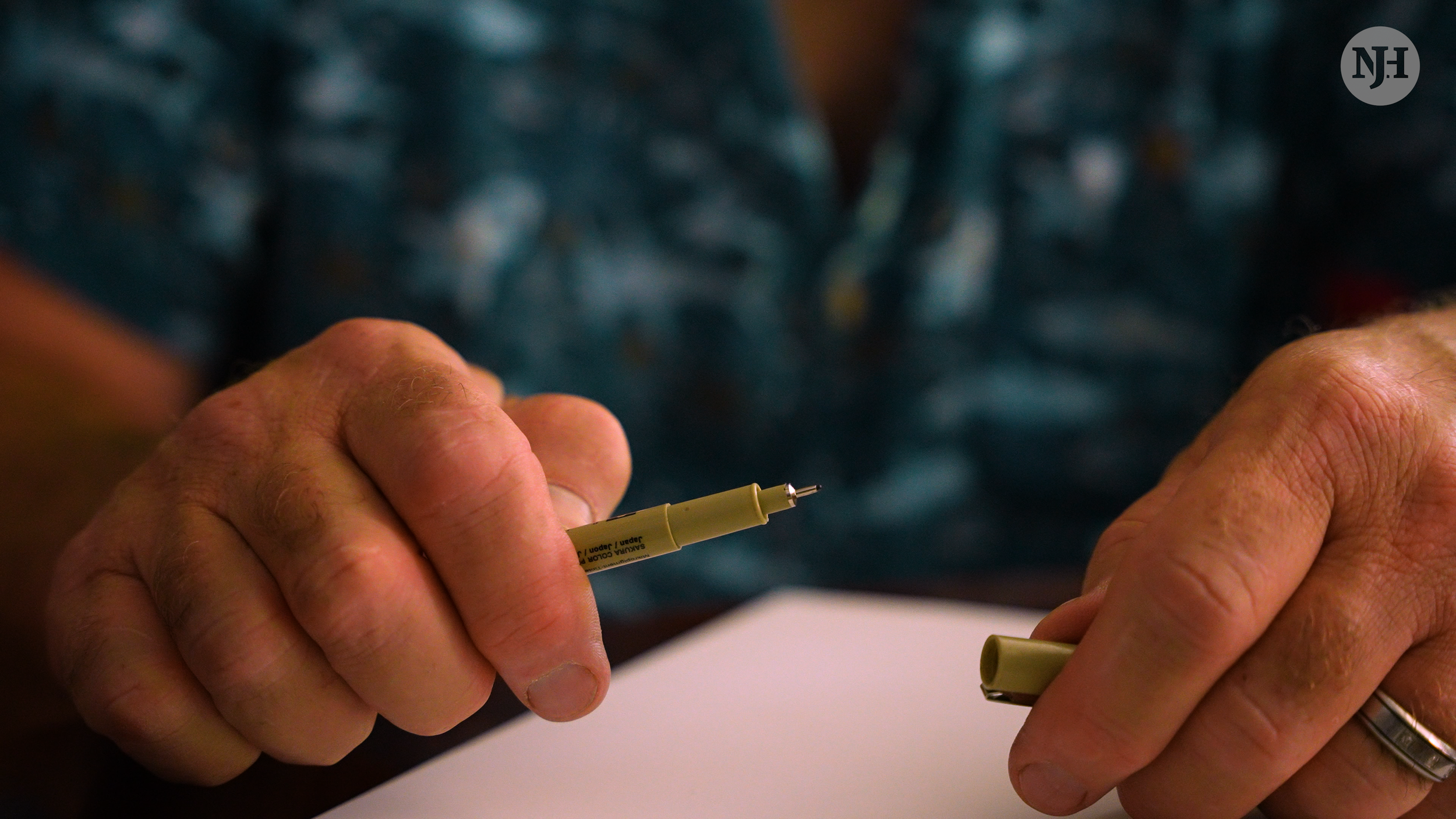
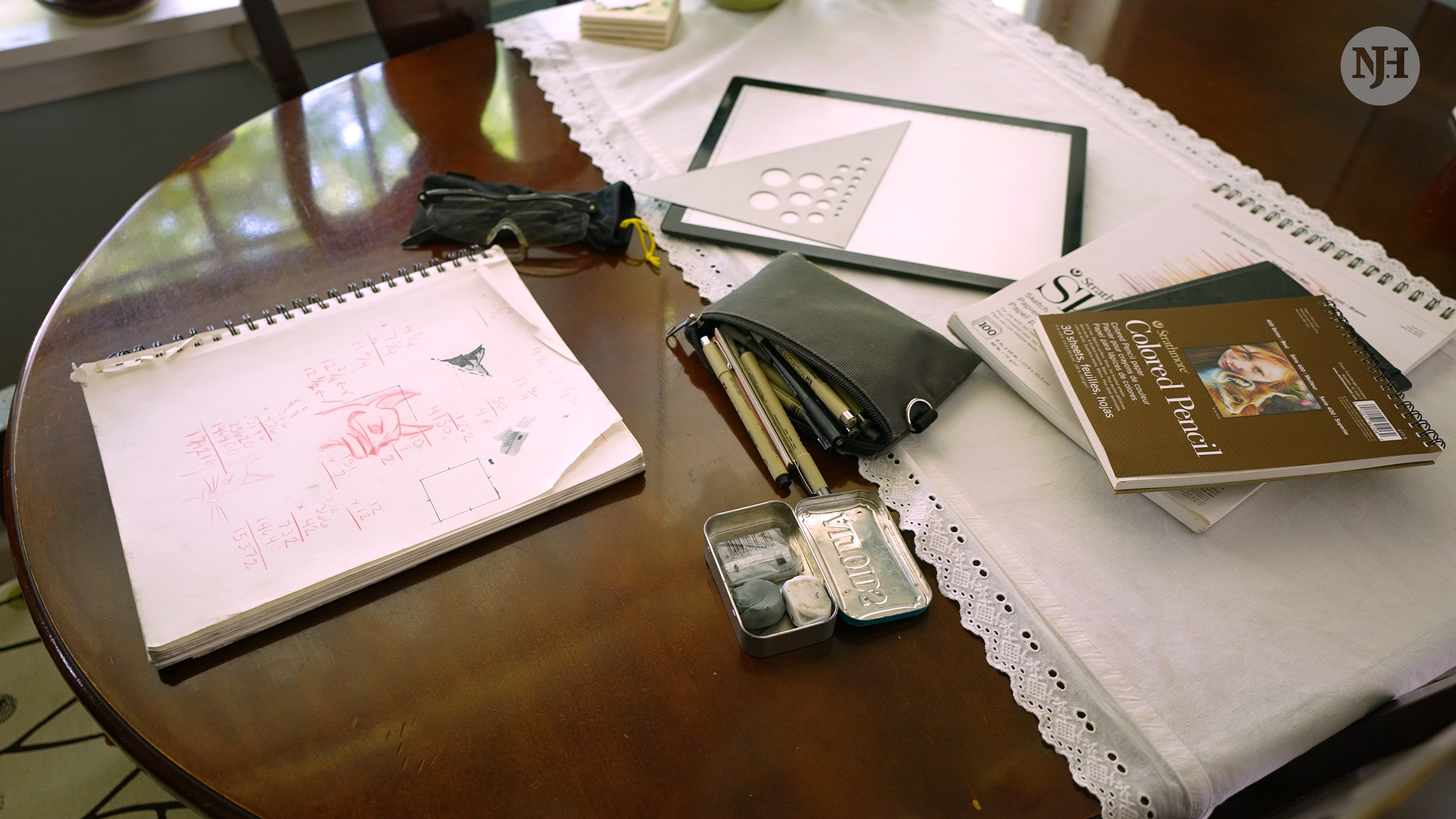
All it takes is a pencil, paper, and your imagination.

Let your imagination run wild
We are so used to maps being created as accurate pieces of information. And that’s certainly needed to be true for our every day lives.
But when it comes to creating your own world through your own map, you can make the rules. You can draw from the geography in the real world or make up your own.
There’s no rules. It’s your story to tell.
Discover more hobbies.

Urban Sketching

Miniatures
Cosplay
Discover more of Rodney’s fantasy maps on Instagram @wyrmwoodmaps.