
Kendama
Kendama is a skill-based hobby built around a simple wooden Japanese toy made up of a handle, cups, and a ball connected by string. The goal is to catch the ball on different parts of the handle and eventually spike it onto the point.
At first glance, it looks straightforward. It’s just a ball and a stick. But once you try it, you realize how much timing and control are involved.
And much like yo-yo, there so much you can do with it. The only limitation is your imagination, practice, and ball and cup.
A Toy Full of Joy in Kendama
It really is a toy. Yet, what’s more fun than playing with something designed to have fun with. Part of kendama’s appeal is its simplicity. There are no batteries, no screens, no complicated setup. You can carry it in a bag and practice almost anywhere.
But the real hook is the feedback. Every attempt gives you immediate information. Either the ball lands cleanly, or it doesn’t. There’s no ambiguity.
So when you mess up, you know right away. And you when you succeed, you certainly feel it too.
That clarity makes progress feel tangible. When you finally land a trick you’ve missed twenty times in a row, you know exactly what changed…most of the time.
For some people, kendama becomes a way to focus. For others, it’s a small daily challenge. For many, it’s simply satisfying to watch skill slowly sharpen.
Learning the Foundations
Once you have your kendama, which is all you really need, it’s time to start. Like many skill-based hobbies, kendama is built on fundamentals.
Before complex trick combinations, you learn how to:
Control the ball’s swing
Catch on the larger cups
Stabilize the handle
Spike with steady timing
These early moves might look simple from the outside, but they teach control. They train your eyes and hands to work together. They build the base that everything else grows from.
Skipping fundamentals usually leads to frustration. Spending time with them builds confidence. Over time, you begin to feel the rhythm instead of forcing it.
Developing as a Kendama Thrower
As you continue, kendama becomes less about landing a single trick and more about flow.
You begin linking movements together. Your catches become softer. Your timing becomes more intuitive. Misses become information rather than frustration.
Some hobbyists enjoy learning structured trick lists. Others invent their own combinations. The path is flexible.
What tends to remain consistent is the rhythm of practice: attempt, adjust, repeat.
Eventually the tricks that once felt impossible eventually feel controlled. And there is always another variation to explore.
The Kendama Community
While kendama can easily be practiced alone, many people discover that it becomes more fun when shared. In fact, being around other kendama hobbyist can open up a whole new world of tricks and potential kendama’s to use. There are also games you can play with one or multiple people.
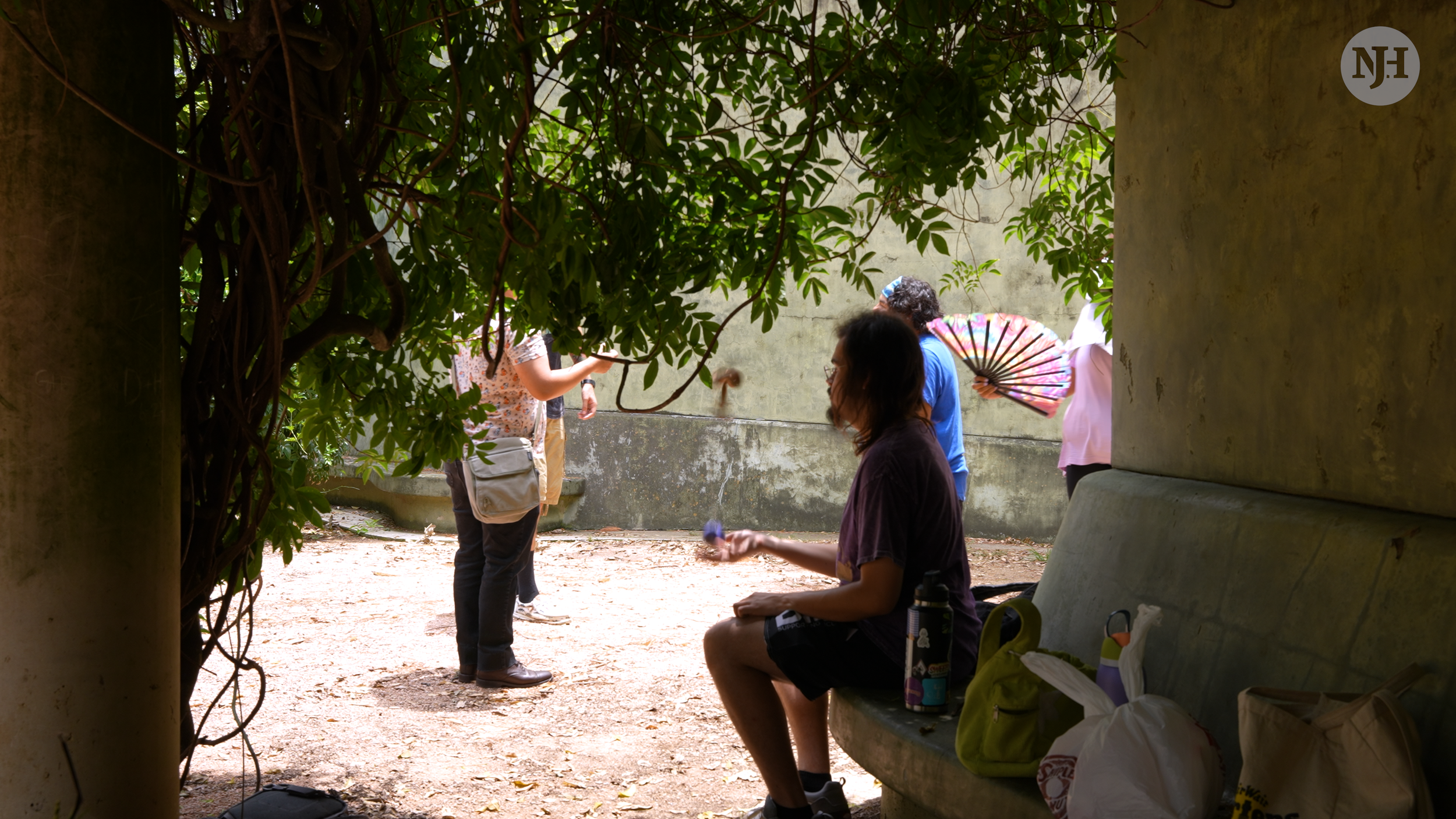
Small groups often meet casually in parks, at skate spots, or outside events. Playing alongside others changes the rhythm. You see how someone else approaches the same trick. You trade attempts. You celebrate small wins together. Even missing feels lighter when it’s collective.
Kendama can also be found at music festivals and outdoor gatherings. It’s common to see small circles of people passing time between sets, practicing tricks, or teaching newcomers the basics. The hobby fits naturally into those environments — portable, social, and easy to pick up without preparation. Also, a great conversation starter for those waiting for the next set.
Unlike highly competitive scenes, kendama communities often feel welcoming to beginners. There’s a shared understanding that everyone has missed the same tricks hundreds of times. More experienced players frequently slow down and demonstrate fundamentals rather than only performing advanced combinations.
You don’t need to join competitions or formal clubs to feel part of it. Simply playing near others — even occasionally — can add a layer of motivation and connection to what might otherwise be a solitary practice.
For some, kendama remains a quiet, personal skill. For others, it becomes a shared language spoken in small circles across cities, festivals, and casual meetups.




One toy,
so many tricks.
Kendama is a part of the family of skill toys. Yo-yo being a close relative.
Playing with a kendama and landing tricks is all about challenging yourself to do better. To keep at it to do what felt impossible just a few days ago.
It’s fun. It’s frustrating. It’s absolutely rewarding.

Small steps
Many of the incredible tricks you see online may seem impossible or a work of magic. While it certainly took a lot of practice and attempts, they all work off the same foundational elements of a kendama.
The spike, cups, and string.
You can get to plenty of tricks when you breakdown that way and hone your skills with the foundation.

Take breaks
Trying to nail a trick can be frustrating.
You almost never get it on the first try. Or the second. Or the 20th.
When you’re feeling more bothered than usual, take a short break. The kendama isn’t going anywhere. And sometimes all we need is to step away to get it in the next pass.
Discover more hobbies.

Yo-yo
Cubing

Jump Rope
Discover more of Vikki’s kendama journey on Instagram @flying____v.