
Letters & Postcards
Once upon a time sending letters was the most common way to stay in touch. Yet, even as the time changes, the beautiful, special nature of letters & postcards hasn’t changed. Handwritten and personal, it’s a way to connect to your closest people and even strangers across the globe.
What really makes writing letters stand out is how the hobby asks you to pause, think about a single person, and create something physical to travel the world.
For most people, the appeal isn’t nostalgia or aesthetics. It’s the feeling of intention. A letter takes time to write, time to send, and time to arrive. That delay changes how you choose your words and how you think about what you want to say.

The Special Draw of Writing Letters
In our very digital world, a physical message, no matter the length, has a distinctly human touch that many letter writers love. Even simple scribbles to hide a misspelling or a line that goes off axis, all these elements are reminders that the writer sat somewhere and thought only of what to write to you.
For some people, letters feel more honest than conversations. You can take your time. You can revise. You can say things you might rush past out loud. Others enjoy the structure — having a beginning, a middle, and an end instead of an open-ended thread.
Postcards, in particular, lower the pressure. There’s only so much space. You write what fits and let the rest go. That limitation is often what makes them enjoyable. And if you’re a traveler or world-curious, postcards are fun piece to add on your journey to purposely sit and write down what you’re experiencing.
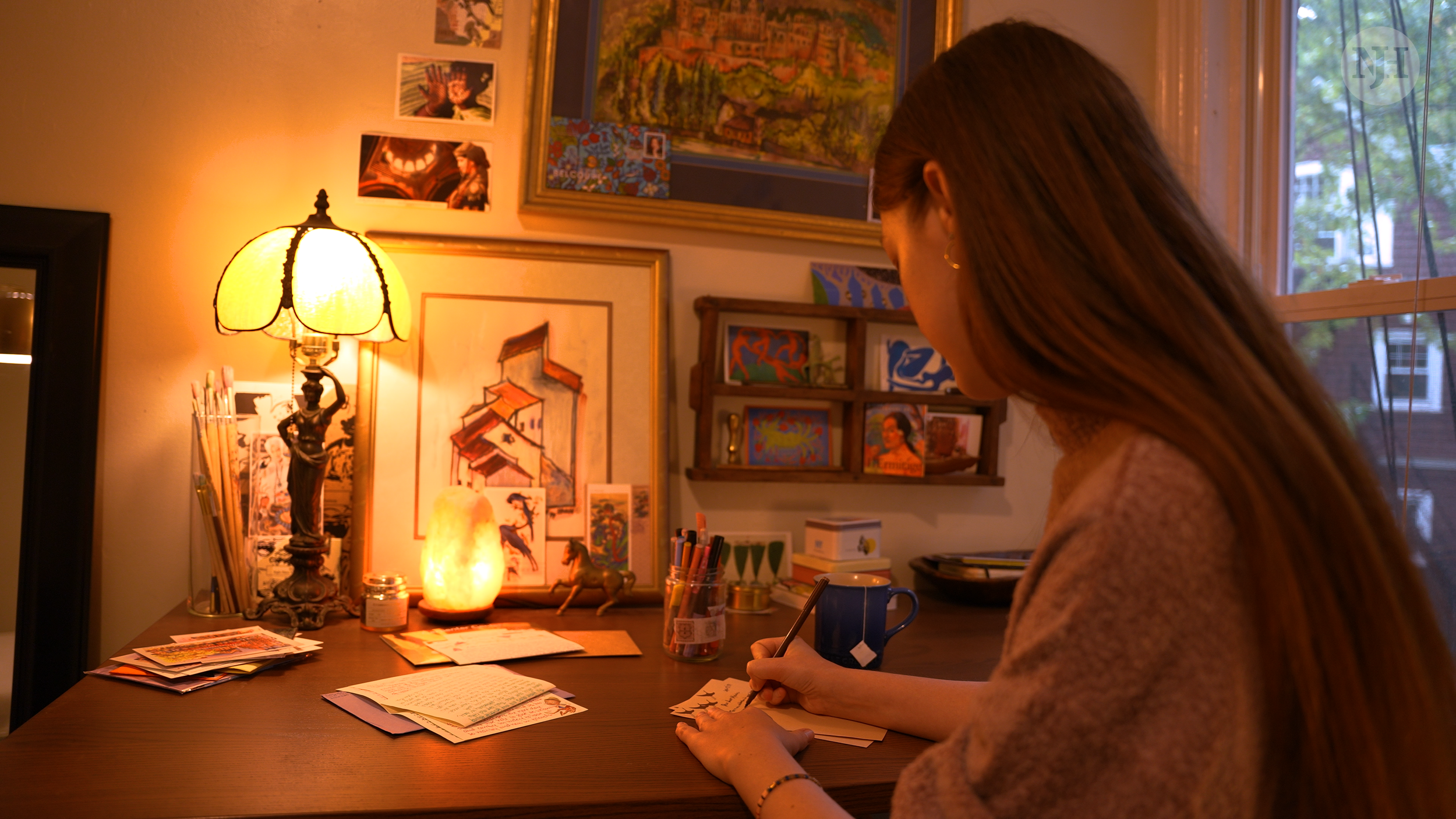
The Momentary Process
Most letters are ordinary. They’re updates about life, small observations, reminders of shared memories. You don’t need a reason or a special occasion.
At first, writing can feel awkward. You might overthink what to say or worry that what you’ve written isn’t “interesting enough.” But here’s a piece of advice, letters don’t need to perform. Their value comes from being personal, not polished. Being genuine and yourself is where letters thrive as a space for you to express yourself. There are no institutional rules to tell you how to write.
Over time, writing letters becomes easier. Writing is already a muscle you have! Just need to practice it with your hands and in a slightly smaller space.
Let’s acknowledge too that at first, that finality of a letter can feel uncomfortable. Once you finish and ship it off, there’s no editing or potentially holding it again. But it often leads to more thoughtful communication. You end up choosing words more carefully and valuing the energy you put into the card itself.
The Quick Tools for Your Letter
A writing utensil, paper, and envelope, and stamps are all you need.
The important nuance is ensuring your envelope size is indeed considered a letter. Something too large may be considered a package and goes through an entirely different flow. This is also true for weight, so even if it the correct shape but you stuff it with too many goodies for your recipient, it may be too heavy.
For US folks, check out the official page from the United States Postal Service for letter sizing information.
Stamps will need to be able to cover the cost of the journey. And it’s different per country. You can read a little more about that below.
As for writing utensil and paper, that’s up to you! We encourage the paper to be a little more firm if it’s going a long distance.
Sending Your First Letters & Postcards
A letter often starts with thinking about who it’ll be going to. Many people start with someone they already know — a friend, family member, or even someone they don’t talk to often. There’s nothing like revitalizing an old friendship with a letter! There are also other opportunities to send letters to nursing homes, abroad military service members, and schools.
Another option is a pen pal. A pen pal could be any of the people we mentioned above but a common characteristic associate with a pen pal is somebody we don’t know quite well in person yet. Finding a pen pal can be as simple as asking for the address of somebody you briefly met on your travels or a friend you haven’t seen in years or a new one you find online.
As the above, letters can be anything you want them to be. We also want to share that you can doodle on them, add photos or scrapbook pieces, or even design the entire letter. It really is a canvas you create on with your vision and intention.
Depending on where it’s going in the world, it’s very important to ensure you’re sending it with enough postage. For your first letters and postcards, head to an official post office near you and speak with somebody at the counter. Let them know the country you’re sending to and they’ll be able to guide you. Double check you’re not at a shipping company! They usually don’t handle small letter, and if they do, they’re not as keen as official post offices.
Once it’s sent, it’s time to be patient. Your recipient may acknowledge receiving your letter with a text or they may simply respond with a letter and you’ll need to wait for it to arrive in your mailbox. It can be tough to be waiting for the first batch of letters you do, we all want things to arrive as soon as can. But that’s the thrill of mail, you have to trust the incredible international postal system that’s been developed.
And when it does arrive, your day gets a little brighter.
It does need to be noted that not all letters make it to their destination unfortunately. They may get lost in the system or arrive in a different mailbox. If you’re receiving or sending to countries that have a more difficult time with postage, it is a real possibility. You can research what places have such hiccups. If you haven’t heard back for a while, feel free to send a quick note to your recipient to check in. They may of not had the time to respond quite yet or are in the middle of writing! Either way, you spent the time to present, write your story, and send it to somebody you care about.
Postcrossing
Postcrossing is a way of exchanging postcards with people around the world, usually strangers. You send a postcard to someone, and in return, a different postcard eventually finds its way to you. There’s no conversation to maintain and no expectation beyond a single exchange.
What makes postcrossing appealing to many is its simplicity. You write a short message, send it off, and let the rest happen on its own timeline. There’s no pressure to be interesting or memorable. Most postcards are brief notes about daily life, travel, small observations, or note about their home country and that’s enough.
There’s also something grounding about the randomness of it. You don’t choose who receives your postcard, and you don’t know who will send one back. That unpredictability shifts the focus away from performance and toward participation.
It’s a great way to get into writing letters & postcards again as it’s low stakes. You’ll also likely be receiving postcards more frequently than if you were to start with just people in your circles. More gifts in your mailbox as cards from around the world arrive!
Writing Letters & Postcards is for Everyone
Whether you have a person in mind now or not, you can write a letter today or on your travels. And it doesn’t have to be perfect, it never has to be. Perfect doesn’t even make sense in this hobby as it’s personal to you and what you hope to share with somebody else.
Put stickers! Send a funky restaurant bill. There’s no style rules, make up your own.
Next time somebody pops into mind, try picking up a pen and paper again.


Staying in touch the classic way.
The world is more digital than ever but that hasn’t changed how special writing a letter or postcard is.
It’s your own handwriting, your own style.
And you can send it anywhere in the world, to old friends and new ones.
Then you wait for a reply. A handwritten, personal reply.
Discover more hobbies.

Calligraphy
Bookbinding

Collaging
Discover more of Stephanie’s snail mail on Instagram @penpal.stephanie.